Baby chickens · getting started
Baby Chick Care & Nutrition
Before the first peep, get the basics ready. Warmth, water, feed, and dry bedding work together to give a growing chick a good start.
For baby chickens raised for backyard eggs. Meat birds, turkeys, ducks, and geese need their own feeding plans.
- Comfortable warmth
- Fresh water
- Complete chick feed
- Dry bedding
In this guide
Prepare a place that can grow with them
Clean the brooder and equipment before arrival. Set up bedding, feed, water, and heat ahead of time. Protect chicks from pets and predators, and arrange the enclosure so they cannot pile into corners. [1]
Use absorbent bedding with good footing, such as wood shavings. Slick newspaper, cardboard, or plastic can make standing difficult. Plan to expand their space as they grow. [3]
Read the chicks, then the thermometer
Chicks crowded under the heat may be cold; chicks avoiding it or panting may be too hot. A group pushed to one side can signal a draft. Provide a comfortable warm area with room to move away, and keep fresh air moving without chilling drafts. [1]
Use the heating equipment’s instructions and the chicks’ comfort to adjust the setup. That air-temperature reference is not a contact heat plate’s surface setting or a target for every part of the enclosure. [2, 3]
If using an infrared lamp, use an approved porcelain socket and secure it with a chain or wire, independently of the electric cord. Follow its rated clearance and fire-safety instructions; keep bedding and other combustible material safely away. [2]
Water first, and always within reach
Have fresh, clean water available as soon as chicks arrive. Use a waterer sized for chicks, with access they can find and reach. Equipment should keep them from getting soaked and chilled. Check that every chick can drink, and increase access as the flock grows. [3]
Keep waterers stable and remove wet bedding around them. Damp litter and stale air make a poor brooding environment. [1]
A complete ration for a growing bird
Choose a complete feed whose directions include baby chickens. Energy, amino acids, vitamins, and minerals all matter; protein percentage alone does not describe the whole ration. Layer feed’s higher calcium is unsuitable for chicks. Scratch grains and scraps can dilute balanced nutrition when they replace the main feed. [4]
Read the feed tag for the intended birds, directions, and cautions.
Two Tucker product options
Show Flock Starter is a crumble with directions for chicks from hatch until 6 weeks, followed by Developer. [7] Show Flock Developer has its own hatch-to-laying-age directions, so a separate starter bag is not the only route. [8] Follow the current bag for the product you buy. These are Tucker examples, not university product endorsements.
Grow a pullet ready for laying
Proper growth now helps build tomorrow’s laying flock. Extension guidance links insufficient body weight during rearing with problems later in the laying flock. [11]
Nutrition and light management before laying affect later egg production and quality. Pullets that begin laying before they are ready may produce smaller eggs throughout the laying cycle. [12]
Aim for the right weight for your type of pullet. Ask your hatchery or breeder for body-weight guidelines, rather than using one weight target for every breed. [2]
Follow From Chicks to First Eggs for the feeding stages beyond the brooder.
The MSU growth charts below do not measure future laying performance. The trial’s weight-gain advantage is not an egg-production percentage.
Research behind Show Flock
In a Mississippi State University trial led by Dr. Kelley Wamsley, the Show Flock group gained about 15% more weight over 61 days than the Tucker medicated feed group. This compares the feeds tested; it does not show that medication caused the difference or set a growth target for laying pullets. [9]
In Tucker Milling’s own cost analysis of the same trial, Show Flock delivered weight gain at about 23–28% less feed cost per pound of weight gain than Competitor A and Competitor B, the two competitor feeds tested below. Current prices and results will vary. [10]
01 · Measured growth
Weight gained per bird
Days 0–61 · pounds of weight gain
02 · Tucker’s cost analysis
Feed cost for the gain
Days 0–61 · dollars per pound of weight gain
The daily chick check
Look at the birds as well as the equipment. Learn their normal activity so a change stands out. [5]
Watch the flock
Are they alert, moving, eating, and drinking? Check for drooping birds, labored breathing, unusual droppings, blocked vents, or difficulty walking.
Check their space
Is warmth comfortable? Is bedding dry? Can chicks reach feed and water without crowding? Adjust the enclosure as they grow.
Act on a change
A weak chick is not automatically just cold. Contact a poultry veterinarian or local Extension office for concerning signs; inform the hatchery if chicks become sick soon after arrival. [5, 6]
Observation and health checks: [5]
Protect the flock and the family
Healthy-looking chicks can carry germs. Wash hands with soap and running water after handling birds or their equipment. Keep birds outside the home and food areas; clean poultry equipment outdoors. Do not kiss or snuggle chicks near your face. Children younger than 5 should not handle poultry. Older adults and people with weakened immune systems face greater risk. [6]
CDC recommends separating new poultry from an existing flock for at least 30 days. Clean hands, shoes, clothing, and equipment between groups, and care for the existing flock first. Separation for disease prevention does not mean a young chick is ready to live with adult birds. [6]
Beyond the brooder
Growing chicks need more space, and their heat needs change with feathering and conditions. There is no single date that fits every setup. [3] For the later feeding stages and calcium choices, continue with From Chicks to First Eggs.
For other poultry, use Find Your Formula or read Niacin for Ducks & Geese. Ask our nutritionist for help choosing feed for your flock.
Sources
Primary Extension publications support the care advice. Tucker product directions support the separate feed examples. Sources checked October 8, 2026; follow your equipment instructions and current bag tag.
-
Brooding Tips for Successful Bird Performance ↩
Preparation, behavior, bedding, and air quality.
-
Raising layer chicks and pullets ↩
Brooder temperature measurement, adjustment, lamp support, and breeder body-weight guidelines.
-
Footing, appropriate equipment, and changing brooding needs.
-
Complete nutrition, calcium, and treat dilution.
-
Health Considerations for Raising Backyard Chickens ↩
Daily health checks and coccidiosis vaccination/feed compatibility.
-
Family hygiene, higher-risk groups, and a 30-day minimum for new-bird separation.
-
Show Flock feed trial ↩
Unpublished trial report on file with Tucker Milling. The comparison uses the reported 0–61-day weight gain.
-
Feed value in the MSU trial ↩
Tucker Milling’s own analysis on file. Feed cost per pound of weight gain, calculated from the trial’s feed intake, gain, and recorded feed prices; not a current retail price quote.
-
Feeding chickens for egg production in small and backyard flocks ↩
Replacement pullets: body weight during rearing and the productive life of the hen.
-
Raising chickens for egg production ↩
Pullet management: nutrition, light management, and egg production after laying begins.
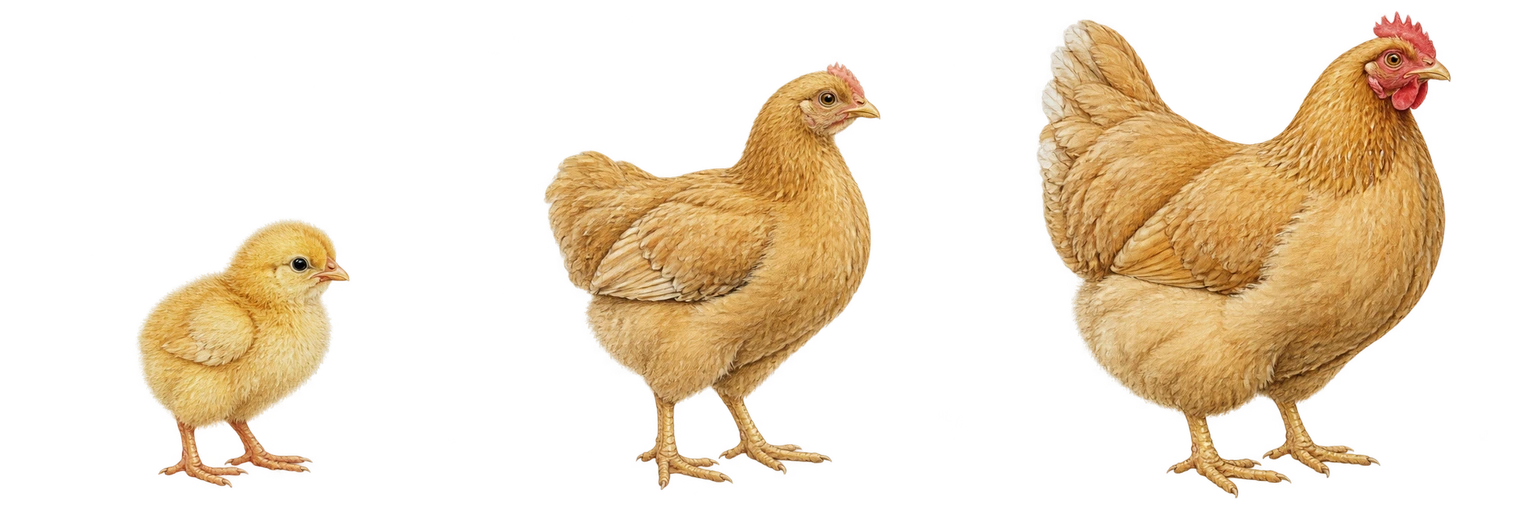
Illustration: original artwork generated for Tucker Milling with AI assistance, displaying the chick from our three-stage chicken illustration.

